
1-805-484-2992
Quotes - Engineering - SalesHeat Load, Grade and Pressure Drop
Oil cooling is not jacket water cooling with a different fluid in the shell. Oil carries roughly half the heat per pound per degree that water does, it is far more viscous, and its viscosity changes sharply with temperature. That combination means a marine oil cooler is sized on three inputs: the heat load in BTU per hour, the oil grade and its temperature at inlet, and how much pressure drop the circuit will tolerate. Horsepower alone tells you almost nothing.
Start here if the oil belongs to the engine itself and the evidence is oil in the expansion tank or a milky dipstick. Engine lube oil is the one oil duty tied to the engine data sheet, where heat to oil is published separately, and it rejects into raw seawater or the jacket circuit rather than into air. That makes it shell-and-tube work with oil on the baffled shell side and copper-nickel tubes with zincs in bronze bonnets, on frames from the B-401 up through the HC range. A pressure test comes before any head gasket is condemned.
This page covers deck hydraulics as a system: pump, relief valve, hose runs and the heat all of them leave in the oil. Where lube and gear coolers are sized from a builder's figure, a hydraulic cooler is sized from how the circuit is actually worked, with time on relief counted at close to full pump power. The page also carries the air-cooled Heresite range: A Series with AC motor fans, H Series with hydraulic fan drive, and DCS Series on 12 or 24 volt DC for small packs. The thruster and crane pages are specific cases of this duty.
Gear oil peaks in the harbor and settles on passage, the reverse of every other cooler in the engine room. Clutch slip during repeated engagements, not steady running, is the design load, so a gear cooler is chosen to absorb a maneuvering peak and hold the sump below the gear builder's published limit, which is a hard number. Like lube oil it sits on the seawater side, with gear oil on the baffled shell and one or two passes to keep oil side pressure drop sensible. Tugs, ferries and any boat that handles ships belong here first.
Two hydraulic duties that break the averaging assumption behind most cooler selections share this page. A bow thruster delivers short bursts near full pump power with long idle gaps, so the question is how many consecutive docking attempts the oil charge can survive. A zero-speed stabilizer runs the pack all night at anchor with the mains stopped and no incidental cooling anywhere aboard. Both usually live in a forepeak or lazarette with no raw water nearby, so the answer is normally an air-cooled Heresite core with a 12 volt, 24 volt or hydraulic fan drive, sized for the worst night.
Anything cooled where it stands on an open deck, in spray and sunlight, belongs here. Cranes, trawl winches and capstans sit too far from the raw water main to justify seawater pipe across a working deck, so the cooler mounts at the power pack and a fan does the work. The distinguishing problems are environmental: fin corrosion that removes capacity without a leak, recirculation when the core is boxed in, and matching the fan drive to the power available at the pedestal. A Series electric and H Series hydraulic-drive cores with baked Heresite coating cover nearly all of it.
Water carries about one BTU per pound per degree. Oil carries roughly half that, so for the same heat you need either more flow or a bigger temperature swing. Oil also forms a thicker boundary film on the tube wall, which is why oil-side heat transfer coefficients are an order of magnitude below water-side ones and why oil almost always goes on the shell side where baffles can disturb the film.
On a cold morning the oil in a deck hydraulic circuit may be several times as viscous as it is at working temperature. If the cooler produces excessive drop under those conditions, the relief valve lifts, the oil warms by throttling instead of working, and case pressures rise where seals cannot take it. Many circuits carry a thermal bypass for exactly this reason.
If the oil circuit lives in the engine room within reach of the raw water main, a shell-and-tube cooler with copper-nickel tubes is compact, quiet and cheap to maintain. If the circuit lives on deck, at a crane pedestal or in an aft winch space, running seawater to it adds hose, penetrations and winterising work for no thermal benefit.
Tell us the oil grade, the gallons per minute through the cooler, the inlet oil temperature and the temperature you want at outlet, plus the pressure drop the circuit can spare. Those four numbers, with your seawater temperature, produce a frame and a pass arrangement.
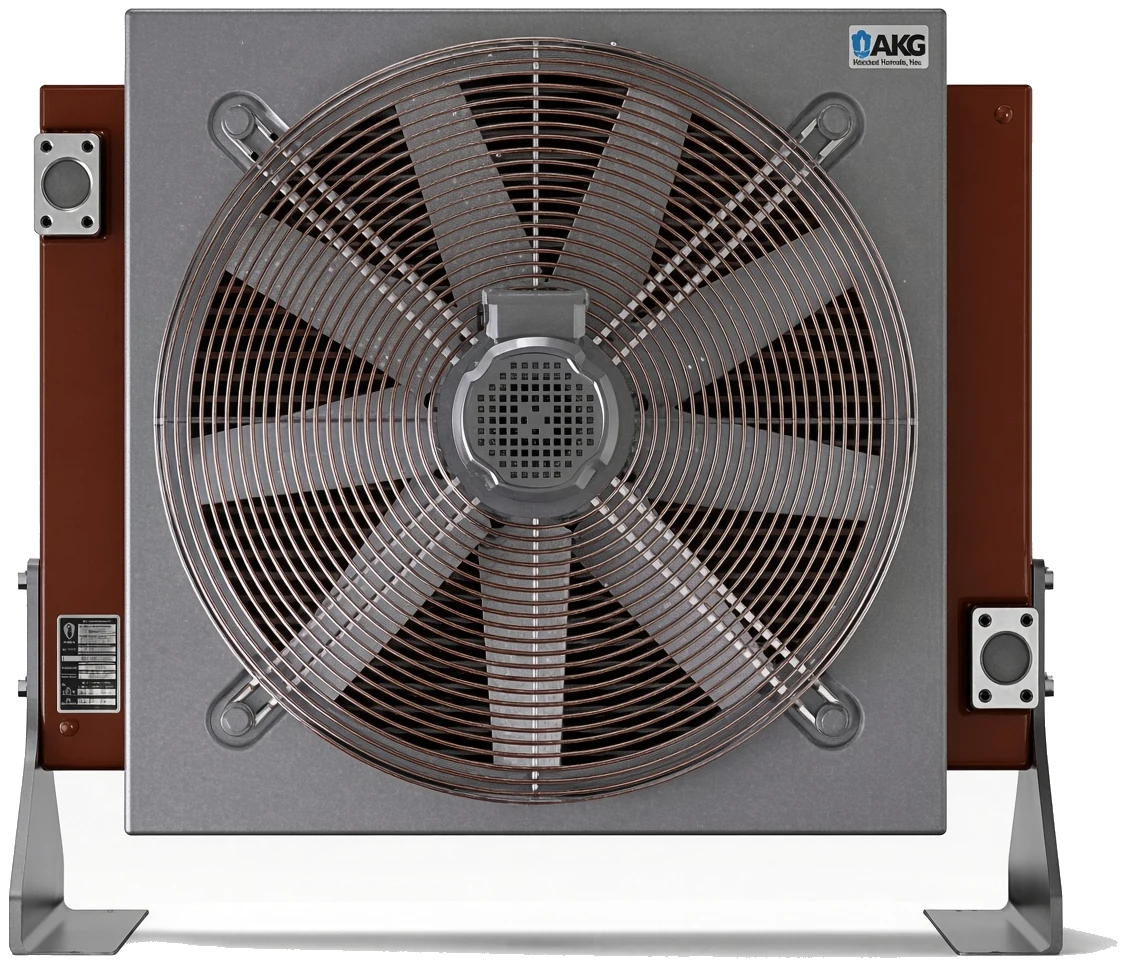
Cooling the Oil




Viscosity Runs the Job
Cold oil is thick oil, so an oil cooler must be selected for the pressure drop it produces on a cold morning, not only for the heat it removes at temperature.
Seawater or Air
If the oil circuit lives in the engine room within reach of the raw water main, a shell-and-tube cooler with copper-nickel tubes is compact, quiet and cheap to maintain. If the circuit lives on deck, at a crane pedestal or in an aft winch space, running seawater to it adds hose, penetrations and winterising work for no thermal benefit.
Replacing an Oil Cooler
Send the nameplate photo, the old part number, the connection sizes and thread type, and the overall length and shell diameter. Tell us what the cooler serves, what oil is in it, and what temperature the circuit runs at now, including whether the problem you are solving is a leak or a temperature that has always been marginal.
If the existing unit was never quite adequate, say so; there is often room in the same envelope for more surface. Discontinued lines including ITT Standard are ordinary work, covered on the ITT Standard replacement page. Call 1-805-484-2992 or email Sales@HeatX.com.
Where the Cooling Actually Is
For those, an air-cooled bar-and-plate cooler makes more sense: A Series on an AC motor, H Series driven hydraulically off the same circuit it cools, or DCS Series on 12 or 24 volt DC. All are rated 250 PSI and 250 degrees F, and for marine service we have the cores Heresite coated against salt air.
What runs on the other side is usually raw seawater, in copper-nickel tubes, with bronze bonnets and zinc anodes. Where there is no seawater line nearby, which is common for deck cranes and winch power packs, an air-cooled unit with a Heresite-coated core is the better answer. This section covers lube oil, hydraulic oil, reduction gear oil and the thruster and stabilizer power units that quietly generate more heat than anyone allowed for.
Oil Cooling
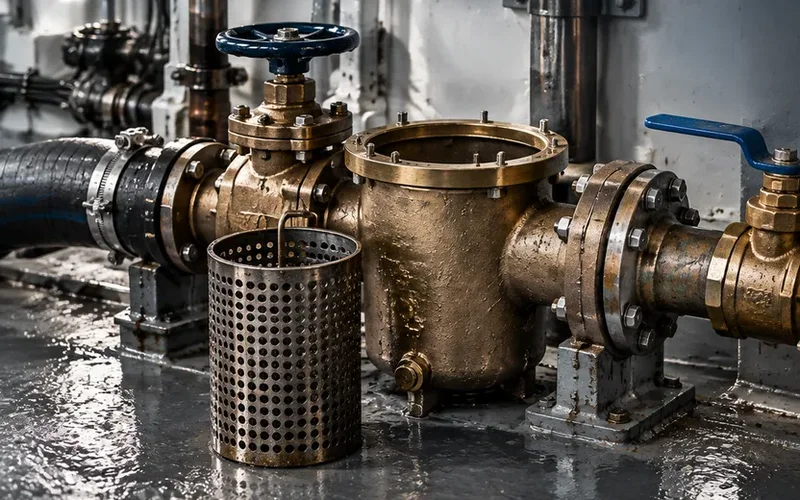
HEAT EXCHANGERS • SHELL AND TUBE
Shell and Tube
The shell and tube range that carries most marine oil cooling duty.
+ Learn More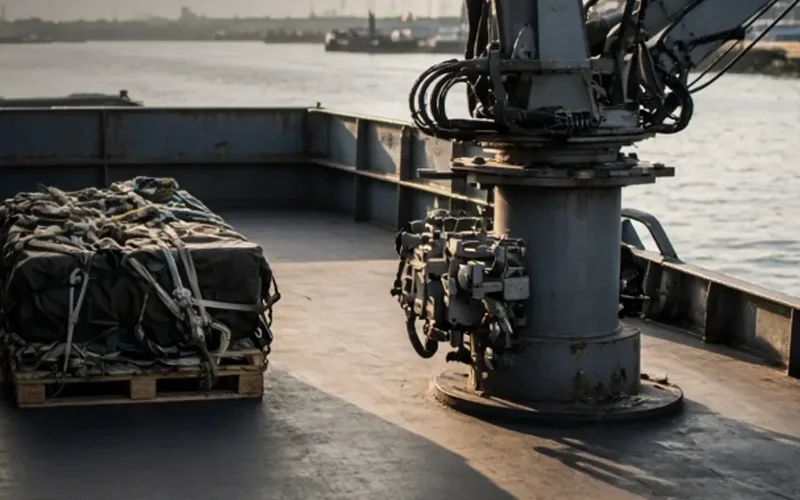
APPLICATIONS • AIR COOLED
H Series
Hydraulic drive air cooled units with Heresite coated cores.
+ Learn More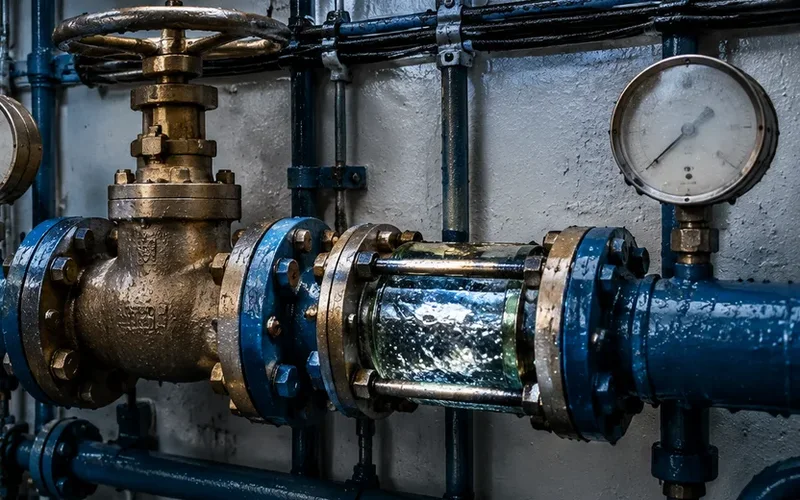
ENGINEERING • SELECTION
Flow and Drop
How pressure drop limits constrain an oil cooler selection.
+ Learn More