
1-805-484-2992
Quotes - Engineering - SalesSame Engine, Different Boat, Different Cooler
Horsepower tells you how much heat there is; the operating profile tells you what the cooler has to live through. A trawler works at high sustained load in dirty inshore water, fouls fast and never gets a slack week. A harbor tug spends its life on and off the clutch at zero forward speed. A ferry does thirty engagements a day on a fixed schedule with no tolerance for an outage. A sportfisher does six hard hours a month and eleven months of sitting in a marina with shore power connected. All four punish coolers, in four different ways.
Fishing is where every cooling duty on this site runs at once, for days, in the dirtiest water the boat will see. Main engines at high sustained load, net drum and winch hydraulics holding tension on relief, and a refrigeration plant running from the first fish aboard all draw inshore seawater carrying silt, weed and shell. The page sets out why surface margin above the bare calculation pays for itself, why two-pass frames that rod out with one bonnet off matter, and what a season's spares kit looks like: a spare bundle, gaskets and two anode sets per unit.
The tug page is about making rated power with the hull standing still. At bollard pull there is no water moving past the hull and no ram air through the engine room, so raw water pump delivery at working RPM has to be measured rather than assumed, and a repower usually needs a new frame rather than a bigger pump. The second load is the gear: dozens of clutch engagements an hour push gear oil to a peak mid-job, which is why gear coolers are the most replaced item in this fleet. Brackish river berths add the material question.
On a scheduled vessel the maintenance window is the specification. Ferries and excursion boats describe their duty in berthings rather than hours, with several hundred clutch engagements a week per gear and a double-ender doubling that, so gear oil coolers wear first and chiller condensers run hardest in warm summer harbor water with passengers aboard. The replacement has to match the existing envelope exactly, leave bonnet pull clearance, and arrive before an overnight or Sunday window opens. The page covers planning from the window backward, keeping a vessel file, and ASME construction on AB Series frames where inspection requires it.
Low hours, easy duty, frequent failures: this page is about the marina, not the heat load. Yacht coolers are destroyed by shore power stray current, stagnant seawater through a layup and anodes nobody has pulled, so the first check is the electrical system, not the tube alloy. Sportfishers add a real thermal case at trolling speed, where a belt-driven raw water pump slows and coolant often runs hotter than at wide open throttle. Motor yachts load their auxiliaries instead: gensets, air conditioning and zero-speed stabilizers at anchor. Most propulsion and genset duty on these boats sits on B Series frames.
When the vessel is judged on availability, documentation and spares become part of the cooling specification. Offshore support, patrol, fire and rescue craft need ASME construction, certified material records or witnessed pressure tests decided at inquiry, because none can be added after the shell is cut; AB Series frames are built to code where required. The duties are also harder than the hours suggest: dynamic positioning makes thruster cooling continuous, and deployment anywhere means conservative seawater assumptions and a strong case for titanium where chlorination is fitted. Complete spare units sail with the vessel on critical duties.
An engine at 85 percent load for two hundred hours a trip rejects heat continuously, fouls its tube side steadily, and leaves no window for cleaning. That argues for extra surface at selection, generous margin on seawater temperature, and a spare bundle in the ship's stores. It also argues for two-pass arrangements that are easy to rod out at sea.
Warm harbor water carrying silt and sulphides is harder on a cooler than cold clean offshore water at the same temperature. Chlorinated water, whether from a treatment system or a nearby discharge, is harder still on copper alloys, and that is the condition where titanium starts to justify its cost.
A ferry with a fixed timetable and a fishing boat mid-season have the same problem for different reasons: a cooler failure costs revenue immediately. For those operators a spare tube bundle, a full gasket set and two sets of anodes in the stores are cheap insurance, and we stock accordingly.
We hold the marine option set as standard across the shell-and-tube ranges: copper-nickel tubes, bronze bonnets, zinc anodes. That is what a boat needs regardless of the flag on the stern, and it is why most selections come down to duty and envelope rather than exotic specification.
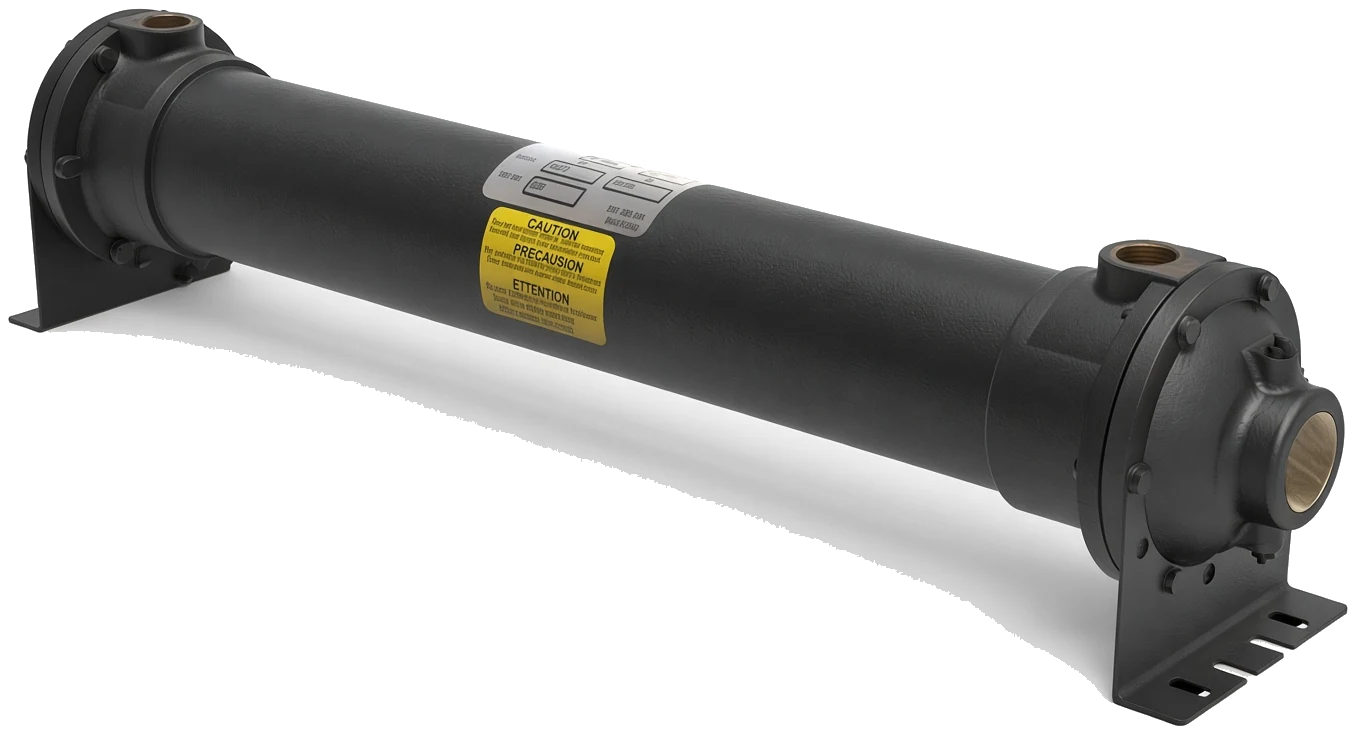
Profile Drives Selection




Duty Cycle Over Rating
A cooler chosen from the engine plate alone ignores the thing that will actually wear it out, which is how the boat is worked, week after week.
Downtime Cost Sets the Spares
A ferry with a fixed timetable and a fishing boat mid-season have the same problem for different reasons: a cooler failure costs revenue immediately. For those operators a spare tube bundle, a full gasket set and two sets of anodes in the stores are cheap insurance, and we stock accordingly.
Documentation and Survey
Some vessels need more than a working cooler. Offshore support, government craft and certain passenger vessels operate under survey regimes that want material traceability, pressure test records and in some cases ASME code construction. AB Series units are available with ASME stamping, and we supply the documentation with the unit.
Tell us at inquiry, not at delivery. Code construction and certified material records affect lead time and cost, and retrofitting paperwork to a unit already built is not possible. The offshore and government page covers what is normally asked for.
Who Should Carry What
A private boat with a flexible schedule can reasonably order on failure, provided the identification work has been done in advance. Photograph nameplates now, record part numbers and connection sizes in the vessel's file, and a replacement becomes a phone call rather than a survey. That is covered on the replacement page.
These pages describe each of those operators in their own terms: what fails, why, which of our series covers it, and what to send us to get a replacement moving. If your boat sits between two categories, that is normal. Call 1-805-484-2992 with the engine, the duty and the old part number and we will work it out from there rather than making you pick a label.
Vessels
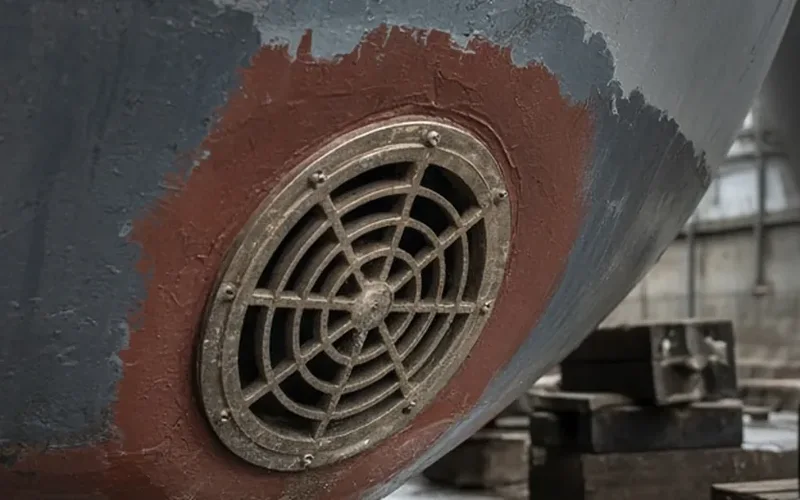
APPLICATIONS • SEAWATER
Raw Water
The seawater circuit every one of these vessels depends on.
+ Learn More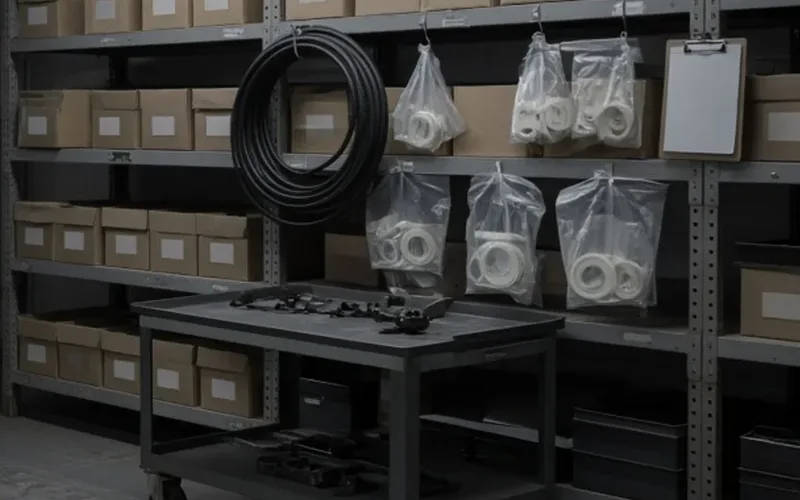
HEAT EXCHANGERS • PARTS
Spare Parts
Bundles, bonnets, gaskets and anodes held as spares.
+ Learn More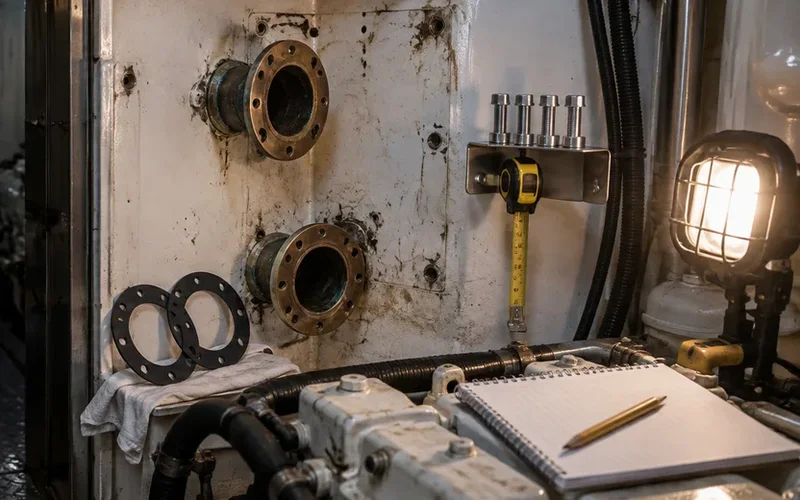
ENGINEERING • SELECTION
Replacing a Cooler
Matching a discontinued unit from measurements and duty data.
+ Learn More